Grand Teton
Grand Teton
We drove down from Yellowstone Lake Hotel with the weather finally starting to clear up after days of gray skies. Light rain was still sprinkling when we pulled into Grand Teton, but we weren’t about to let that stop us. Grabbed our gear and headed straight for Jenny Lake. Ten miles of hiking in the drizzle and it was absolutely worth it. Sometimes the best adventures happen when the weather isn’t perfect.
Jackson Lake Lodge and Morning Wildlife
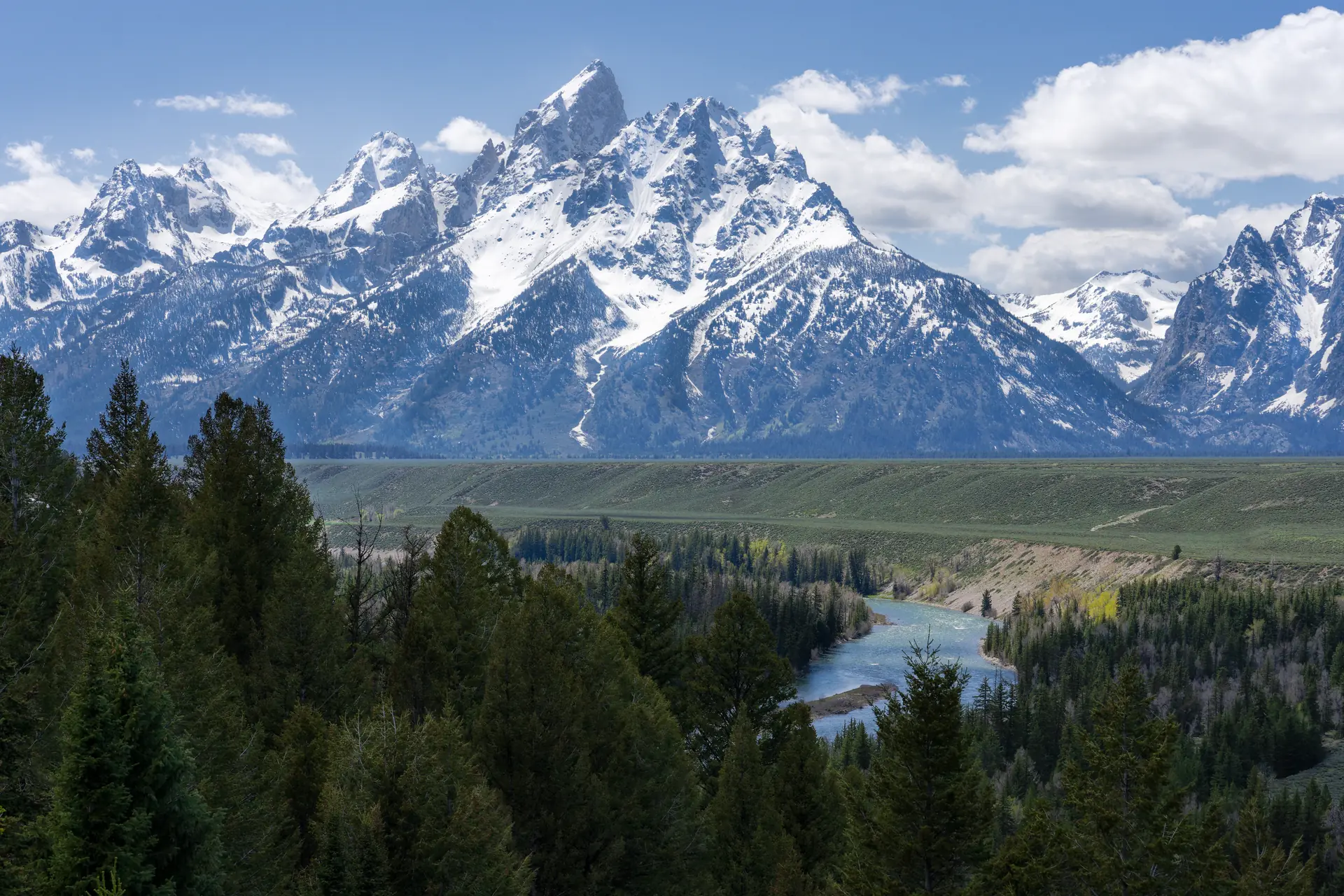
Checked into Jackson Lake Lodge and splurged a bit on a room with a mountain view. Best decision we made. The Teton Range stretched out right in front of our balcony, those jagged peaks rising up like cathedral spires against the sky. In the mornings, we’d sit outside with our coffee and watch herds of elk grazing in the meadows below. One morning we even spotted a pack of wolves moving through the valley. Just sat there quiet, watching them work their way across the landscape.
The lodge itself has quite a history. Built in 1955, it was designed by architect Gilbert Stanley Underwood, who also designed the Ahwahnee Hotel in Yosemite. John D. Rockefeller Jr. played a huge role in preserving this entire area, quietly buying up land in the 1920s and 30s to prevent commercial development. Without his efforts, we might be looking at ski resorts and strip malls instead of pristine wilderness.
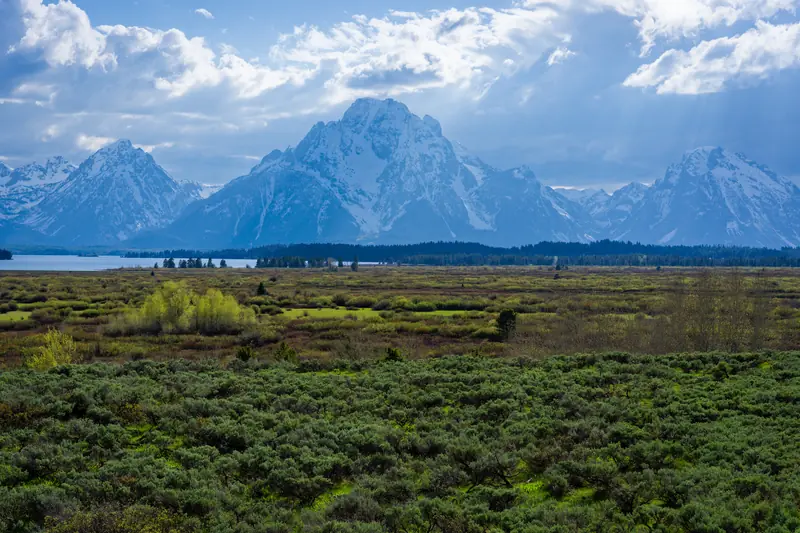 Willow Flats
Navigating Grizzly Country
I’ll be honest, we were a bit nervous about grizzly bears. The staff at the lodge were really helpful though, pointing us toward hikes on the southern side of the park around Jenny Lake where grizzlies are less common. They explained that grizzlies tend to favor the northern areas and higher elevations, while black bears are more typical in the southern sections. Made us feel a lot better about our plans.
Interesting fact: the Teton Range is one of the youngest mountain ranges in the Rockies, only about 9 million years old. They’re still growing too, rising about a foot every 300 to 400 years due to ongoing tectonic activity along the Teton Fault.
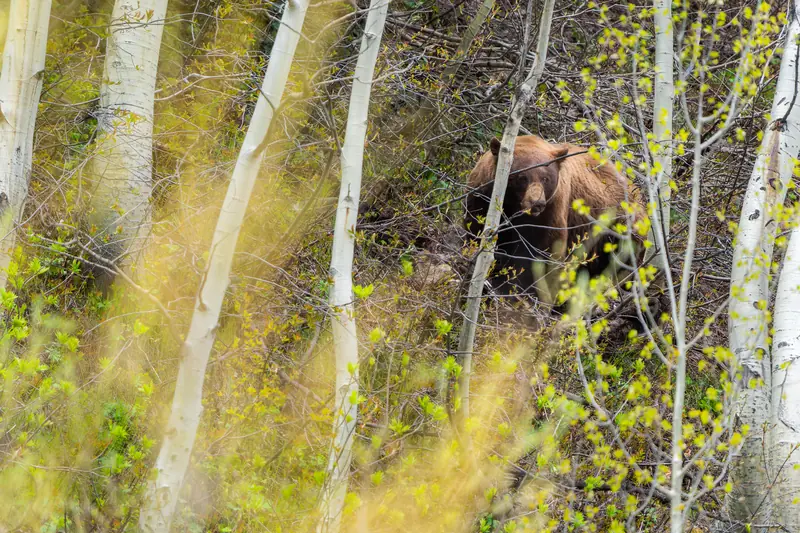 Cinnamon Black Bear
Moose Pond Encounter
Near Jenny Lake, we came across Moose Pond and got lucky. A cinnamon black bear and her cub were foraging along the water’s edge. We kept our distance and stayed calm, just watching them do their thing. The mother kept glancing our way but seemed unbothered. Her cub was adorable, stumbling around and learning how to overturn rocks looking for insects. We backed away slowly after a few minutes and left them in peace. That rust-colored coat on a black bear is caused by a color phase variation, not a separate species. Pretty rare to see.
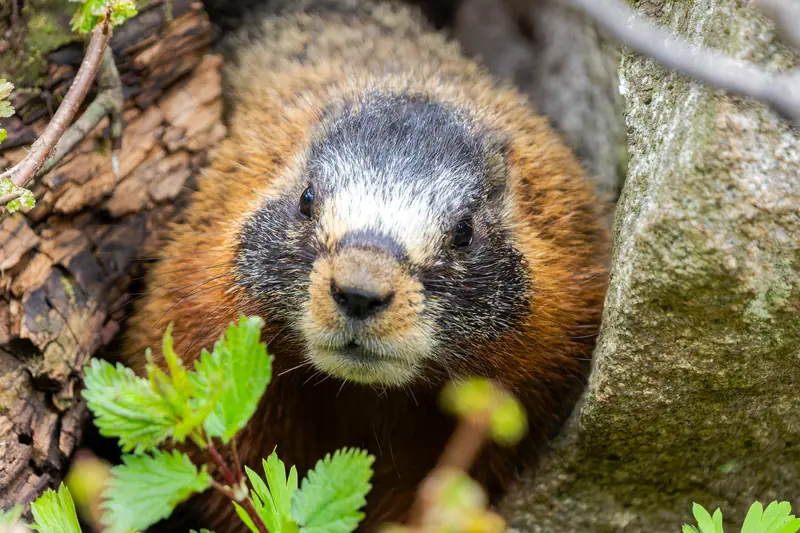 Yellow-bellied Marmot
The marmots were everywhere, standing on rocks and whistling their alarm calls. These chunky rodents hibernate for about eight months of the year, spending the short summer fattening up for their long winter sleep. Native Americans called them “whistle pigs” because of the sharp warning sounds they make.
Taggart to Bradley Lake Trail
One of our best days was hiking from Taggart Lake to Bradley Lake. The trail winds through areas that burned in the 1985 wildfire, and you can still see the regeneration happening four decades later. Lodgepole pines are slowly reclaiming the landscape. The views of the Tetons reflecting in both lakes were stunning, that classic Wyoming postcard scenery.
About halfway through the hike, we rounded a bend and there was a moose standing right in the middle of the trail. Massive animal, probably close to 1,000 pounds. We froze and it just stared at us for what felt like forever before casually wandering off into the willows. Your heart definitely gets going when you’re that close to something that size.
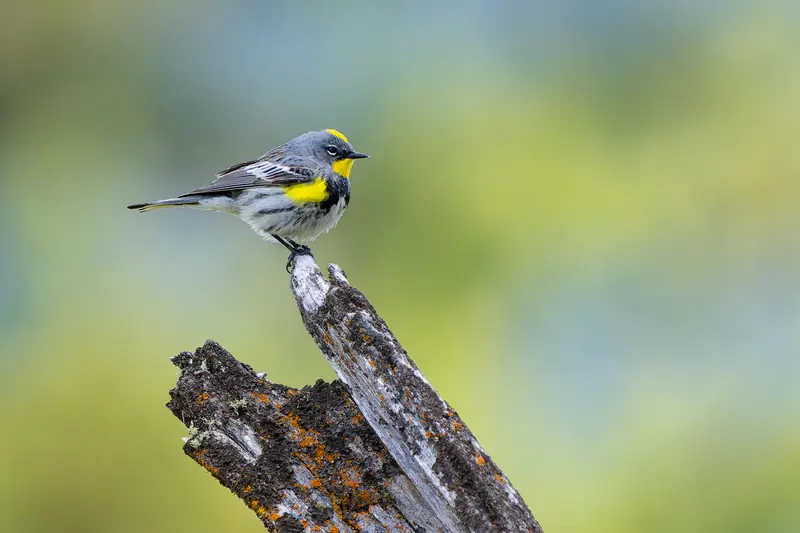 Audubon’s Warbler
The birdlife was incredible too. Spotted this Audubon’s Warbler flitting through the trees, its bright yellow patches catching the sunlight. These warblers breed in the mountains and migrate to Mexico and Central America for the winter. John James Audubon first described this species during his travels through the American West in the 1830s.
Inspiration Point
On another day-hike at Jenny Lake, we went up to Inspiration Point. Here, the ground squirrels were constantly begging for food near the trailheads. Don’t feed them, of course, but they’re entertaining to watch. They look like chipmunks but lack the facial stripes. These little guys can hibernate for up to eight months, their body temperature dropping to near freezing.
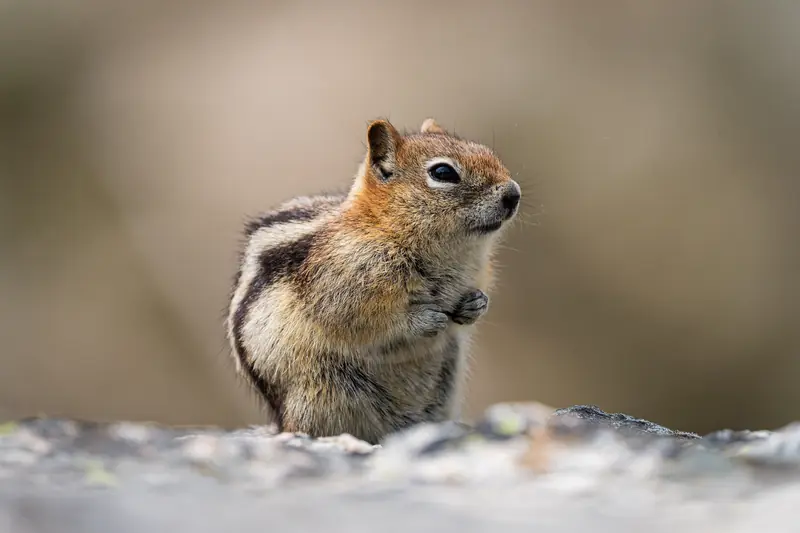 Common Golden-mantled Ground Squirrel
The view from Inspiration Point is something else. You’re standing 400 feet above Jenny Lake with the entire valley spread out below you. The trail was built by the Civilian Conservation Corps in the 1930s, part of Franklin Roosevelt’s New Deal program that put thousands of young men to work during the Great Depression. They carved these switchbacks into solid rock with hand tools and dynamite. Takes about two miles of steady climbing to reach the viewpoint, but every step is worth it when you see that panorama.
Mormon Row
Took an afternoon to visit Mormon Row and those famous old barns. Mormon homesteaders settled this area starting in the 1890s, building these structures by hand from local timber. The Moulton Barn, probably the most photographed barn in America, was built around 1913 by T.A. Moulton and his sons. It’s still standing because of the craftsmanship and the dry Wyoming climate.
The settlers faced brutal winters and short growing seasons, but they stuck it out for decades. By the 1950s though, most families had moved on. Now these weathered buildings stand as monuments to their determination, with the Tetons rising dramatically behind them.
Food and Final Thoughts
Dinner at Jackson Lake Lodge was excellent, though yeah, it hit the wallet pretty hard. They also have a 50s-style diner called the Pioneer Grill that’s more budget-friendly. Sat at the counter, ordered burgers, and chatted with other hikers about the trails they’d done. Good food, good conversation.
Here’s the thing: we actually liked Grand Teton better than Yellowstone. Maybe it’s because the crowds were smaller, or because the mountains are right there in your face instead of spread out across a vast plateau. The hiking felt more intimate somehow, more connected to the landscape.
Until Next Time
There are so many trails we didn’t get to. The Paintbrush Canyon and Cascade Canyon loop, the Death Canyon Trail, the hike up to Static Peak. We’re already talking about coming back, maybe in the fall when the aspens turn gold and the elk are bugling during the rut.
For now though, we’re heading home with sore legs, hundreds of photos, and memories of wolves at dawn and bears at sunset. Not a bad way to spend four days. Missing home already but glad we made the trip. Can’t wait to plan the next one.