Olympic National Park
Olympic National Park
Just wrapped up an incredible week at Olympic National Park and wanted to share the experience while it’s still fresh. We flew into Seattle on a clear September morning and made the drive out to our Airbnb on Lake Sutherland. The place was perfect, right on the water with kayaks we could use whenever we wanted. Already missing those mountain views.
Getting Settled
The drive from Seattle took about three hours, but the scenery made it go by quick. Olympic National Park is actually one of the most diverse national parks in the country. President Theodore Roosevelt first protected the area in 1909 as Mount Olympus National Monument, primarily to preserve the habitat of the Roosevelt elk. The park wasn’t officially established until 1938 under Franklin D. Roosevelt. Named after Mount Olympus, the park’s highest peak at 7,980 feet, it spans nearly a million acres and contains three distinct ecosystems: rugged Pacific coastline, temperate rainforest, and alpine mountains.
Our Airbnb hosts left a binder full of local recommendations. We spent the first evening just relaxing by the lake and planning out the week ahead.
Lake Crescent
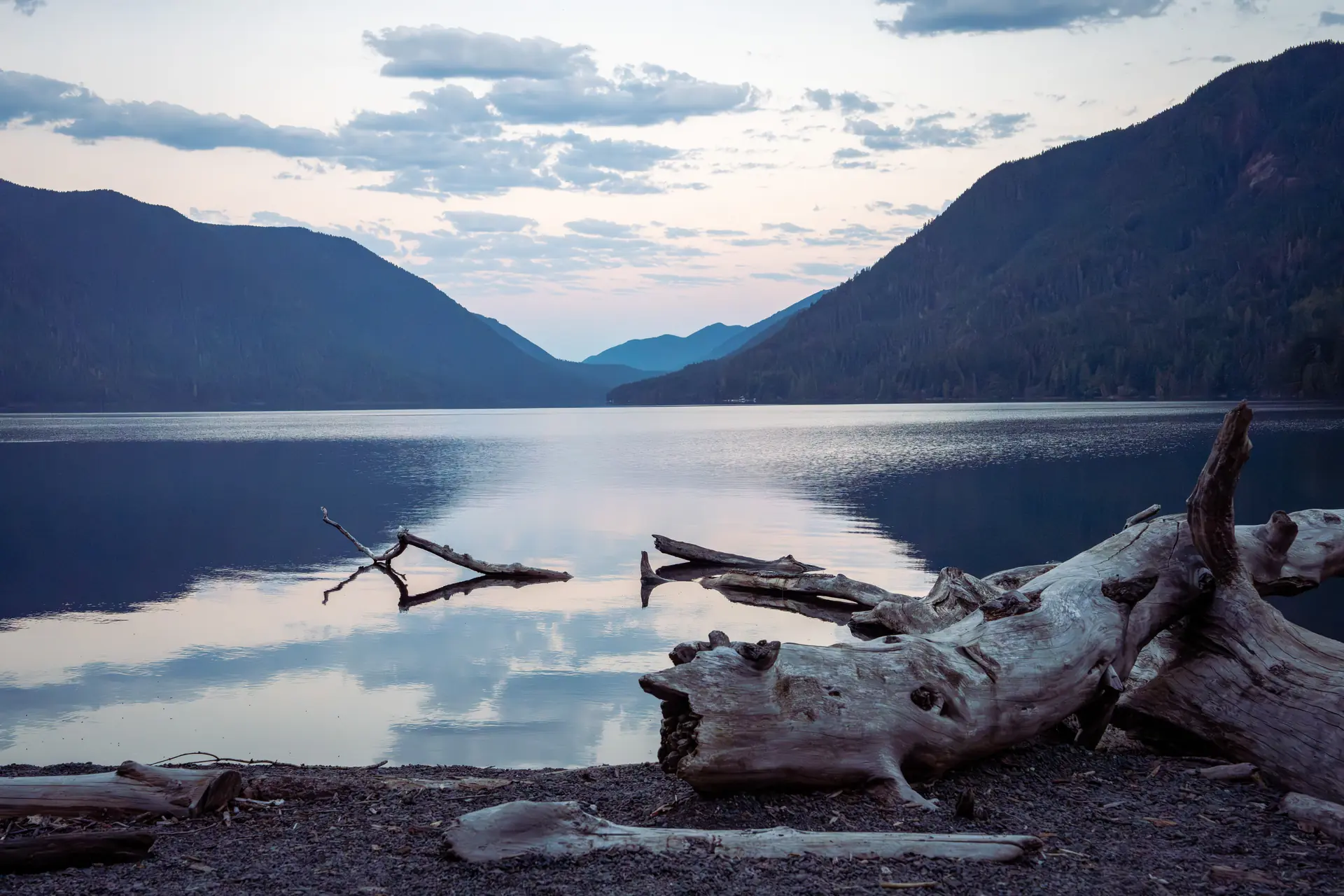
Got up around 6 AM on our first full day, still dark out, and headed to Lake Crescent for a morning hike. Lake Crescent is one of the deepest lakes in Washington at 624 feet. It was carved out by glaciers during the last ice age. The water has this incredible blue-green color because of the depth and clarity. There’s almost no nitrogen in the lake, which limits plant and algae growth. That’s also why the water is so clear.
The lake is also home to two unique fish subspecies found nowhere else on earth. The Crescenti cutthroat trout and the Beardslee trout both evolved in isolation here after the lake was cut off from Lake Sutherland thousands of years ago by a massive landslide. The Crescenti is particularly rare and lives in the deeper parts of the lake.
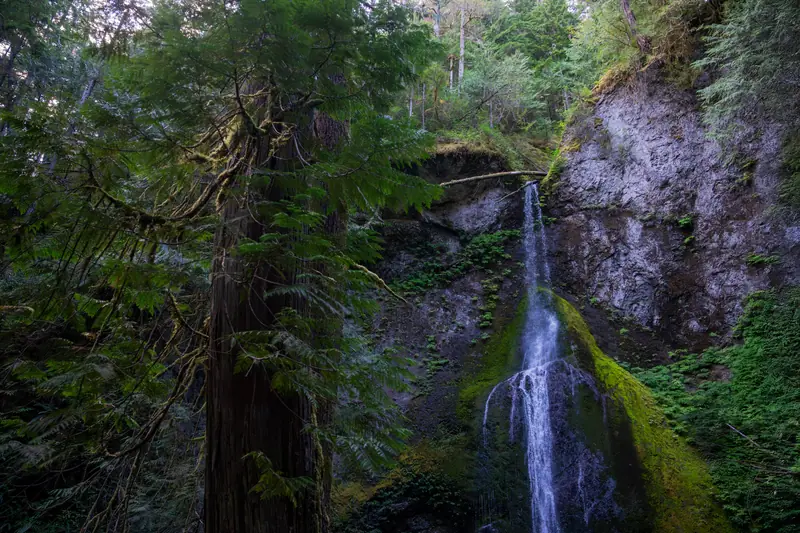 Marymere Falls
We hiked to Marymere Falls, an easy trail just under two miles round trip through old-growth forest. The falls drop about 90 feet over a basalt cliff. The name comes from a description in an 1890 newspaper article, though the exact origin of “Marymere” isn’t entirely clear. The trail follows Barnes Creek, which feeds the falls. The creek is named after a homesteader who lived in the area in the late 1800s. The forest here is dense with western red cedar and Douglas fir. Some of the cedars are over 700 years old. The Native peoples of the Olympic Peninsula, including the Klallam and Quileute tribes, used western red cedar for everything from canoes to houses to clothing. They called it the “tree of life.”
The falls were running strong despite it being September. The mist created rainbows in the morning light. We sat on a bench near the viewing platform and just listened to the water for a while.
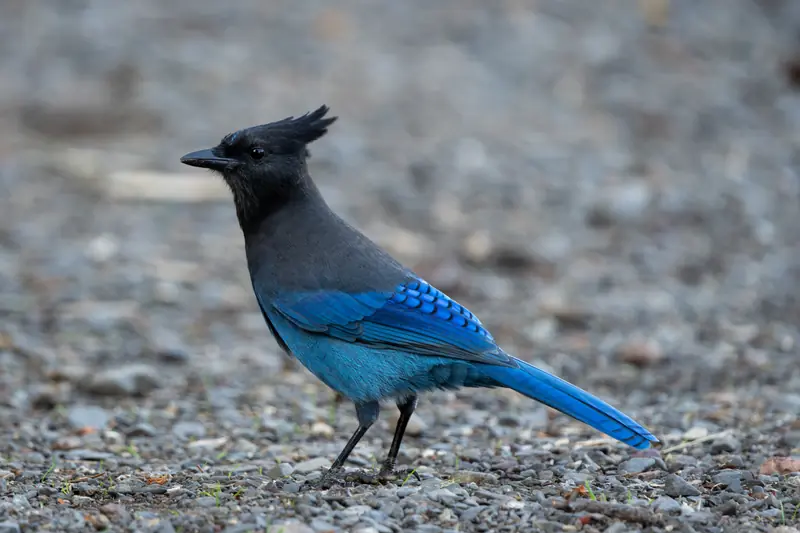 Stellars Jay
After our hike, a Steller’s jay landed near us on the trail. Steller’s jays are corvids, related to crows and ravens, and they’re just as smart. This one was clearly used to people and probably hoping for a handout. They’re bold birds. Beautiful too, with that dark blue and black plumage and the distinctive crest.
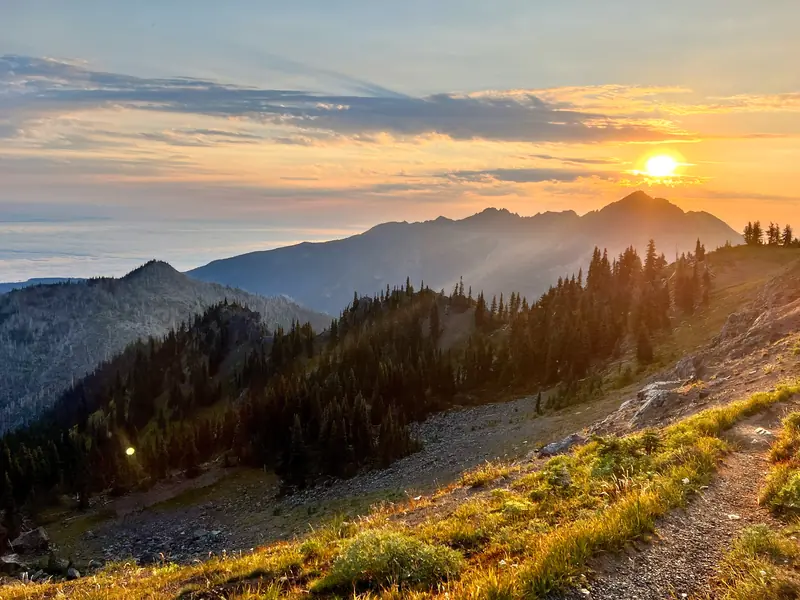 Hurricane Ridge Sunrise
Hurricane Ridge
Got up before dawn another day, around 6 AM while it was still dark, to catch sunrise at Hurricane Ridge. The drive up is no joke, about 5,000 feet of elevation gain in just 17 miles. The road was built by the Civilian Conservation Corps in the 1930s and remains one of the most spectacular mountain drives in the Pacific Northwest. Worth every hairpin turn though.
The sunrise was unreal. We were above the clouds looking out at the Olympic Mountains. On clear days you can see Mount Rainier, Mount Baker, and even Vancouver Island across the Strait of Juan de Fuca. The ridge gets its name from the intense winds that rip through here, sometimes exceeding 100 mph in winter. September was much calmer, thankfully.
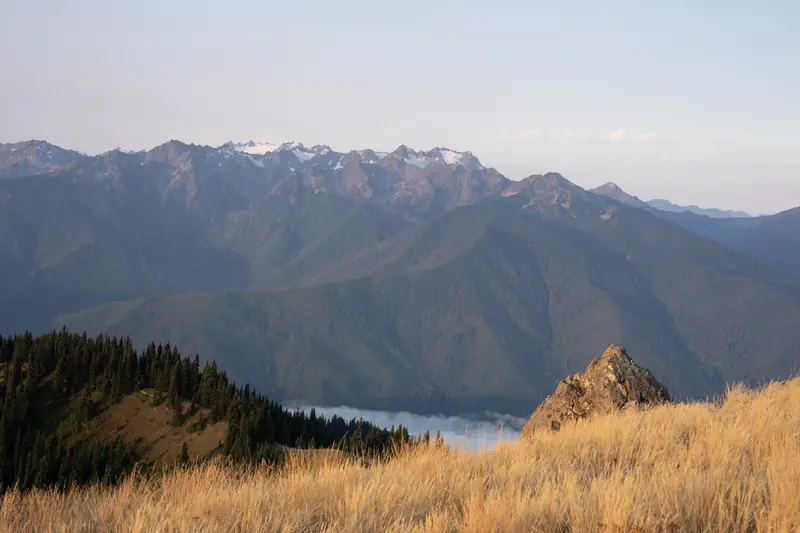 Hurricane Ridge
We hiked around for a few hours. Black-tailed deer were everywhere, completely unbothered by people. We also spotted a couple of grouse on the trail, their mottled brown feathers blending perfectly with the alpine vegetation. The meadows up here are filled with wildflowers in summer, but by September most had gone to seed. Still beautiful though. The alpine environment is fragile and takes decades to recover from damage, so we stuck to the trails.
The visitor center at Hurricane Ridge recently burned down in May 2023. It was a significant loss for the park. The building had been there since 1958 and served as a vital hub for visitors. They’re working on plans to rebuild, but for now there are just temporary facilities. Didn’t take away from the experience though. The mountains are still there.
Hoh Rainforest
The drive to Hoh Rainforest was the longest of the trip, about two and a half hours from our Airbnb. Totally different world from Hurricane Ridge. The Hoh is one of the largest temperate rainforests in the United States and receives between 12 and 14 feet of rain annually. That’s more rainfall than most tropical rainforests get.
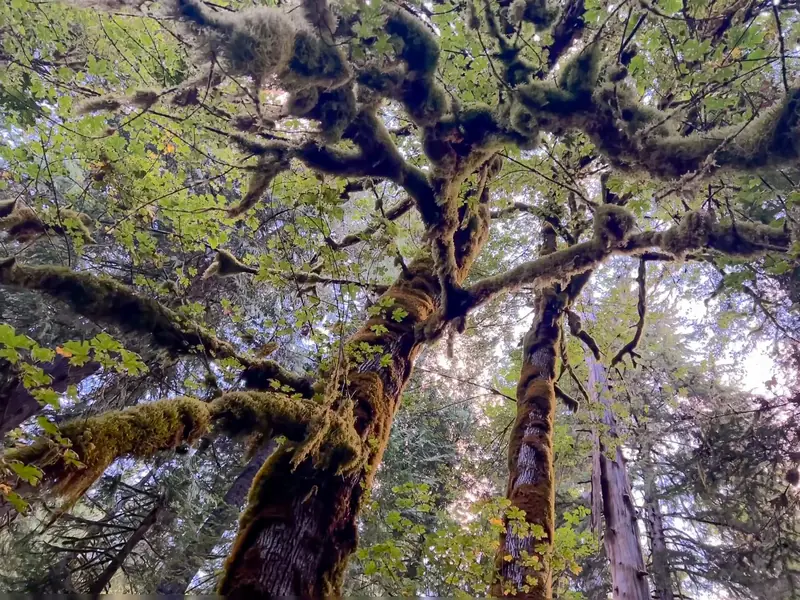 Hoh Rainforest
We got there early, around 6 AM while it was still dark. The forest was quiet except for birds and the sound of the Hoh River nearby. Everything is covered in moss here. The Sitka spruce and western hemlock trees create a canopy so thick that it filters the light into this soft green glow. Some of these trees are over 500 years old.
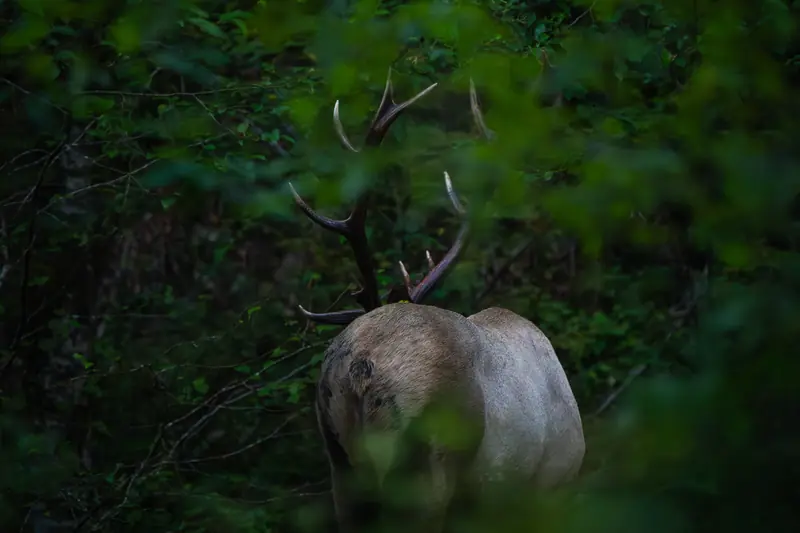 Roosevelt Elk
We spotted a small herd of Roosevelt elk grazing in a meadow near the Hall of Mosses trail. These elk are the largest of the four surviving subspecies of elk in North America. Bulls can weigh up to 1,100 pounds. They were nearly hunted to extinction in the early 1900s, which is why Teddy Roosevelt stepped in to protect them. Now there are about 5,000 in the park. We kept our distance and just watched them for a while. One of those moments you don’t forget.
The Hall of Mosses trail is only about a mile loop but it feels like walking through a fairy tale. Club moss hangs from maple trees in thick curtains. Nurse logs, fallen trees that provide nutrients for new growth, are everywhere. The forest constantly recycles itself.
Elwha River Trail
We hiked the Elwha River Trail another day. The Elwha has a fascinating history. Two dams on the river were removed between 2011 and 2014 in the largest dam removal project in U.S. history. The dams had blocked salmon from reaching their spawning grounds for over a century. Now the river runs free again and the salmon are returning.
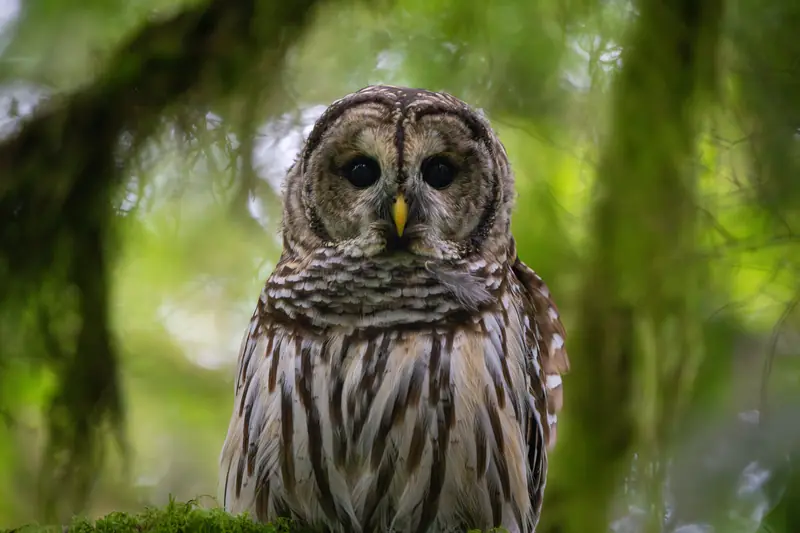 Barred Owl
On the trail, we noticed a barred owl perched in a tree about 20 feet up. Just sitting there watching us. Barred owls aren’t native to the Pacific Northwest. They’ve expanded their range westward over the past century and now compete with the endangered spotted owl for habitat and food. It’s become a conservation issue, but seeing one up close was still incredible. Those dark eyes don’t miss anything.
Sol Duc Falls and Hot Springs
One of the highlights was visiting Sol Duc Falls and the hot springs. The drive to Sol Duc Valley took about an hour from our Airbnb. The name “Sol Duc” comes from a Native American word meaning “sparkling water,” though there’s also a great creation story behind it.
According to local legend, two dragons once lived in the area, one at Sol Duc and one at nearby Elwha. They fought a terrible battle that shook the mountains and valleys. Neither could defeat the other, so they both retreated to their caves in shame and cried tears of rage. Their tears became the hot springs at Sol Duc and Elwha. The dragons are said to still be there, crying to this day.
The hike to Sol Duc Falls is an easy mile through old-growth forest. The falls split around a rock outcropping and drop about 50 feet into a narrow gorge. The power of the water is impressive, even in September. The sound echoes off the canyon walls.
After the hike, we spent some time at the Sol Duc Hot Springs Resort. The springs themselves have been used by people for thousands of years. The Quileute people considered them sacred healing waters. A resort was first built here in 1912 but burned down in 1916. The current resort has several soaking pools fed by the natural hot springs. The water comes out of the ground at around 99 degrees. Perfect after a long hike.
The Coast
Rialto Beach was a whole different experience. The Olympic coastline is part of the longest stretch of wilderness coast in the lower 48 states. We spent an afternoon exploring the tide pools and walking along the beach. Sea stacks, those isolated rock formations offshore, are remnants of the ancient coastline that’s been eroded by waves over thousands of years.
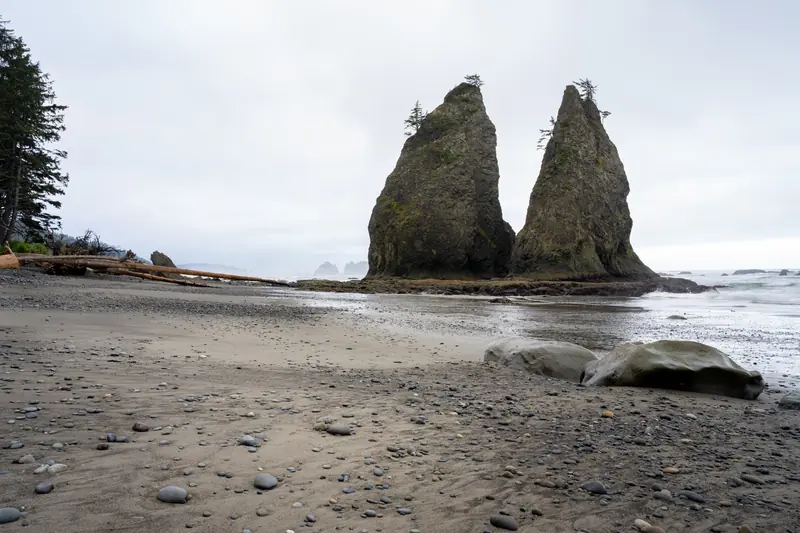 Rialto Beach
The tide pools were amazing. We saw purple and orange sea stars, anemones, tiny crabs, and all kinds of stuff. There’s a whole ecosystem in those little pools that gets refreshed twice a day with the tides. You have to be careful where you step. We made sure to put any rocks we moved back exactly where we found them.
Walked up the beach toward Hole-in-the-Wall, a natural sea arch you can walk through at low tide. Found a lot of driftwood along the way. Some of the logs were massive, entire trees that had washed down rivers and out to sea before being deposited back on shore. The beach also had agates and other smooth stones worn down by the constant wave action.
We came across something unexpected further down the beach. A dead mountain lion, probably washed up recently. It was surreal. Mountain lions are rarely seen in the park, even though an estimated 50 to 100 live here. They’re incredibly elusive. Finding a carcass like that reminded us how wild this place really is.
Lake Adventures
We took advantage of the kayaks at our Airbnb a couple times. Lake Sutherland is smaller and quieter than nearby Lake Crescent, which made it perfect for just paddling around in the morning with coffee. The water was clear and cold. You could see down pretty far.
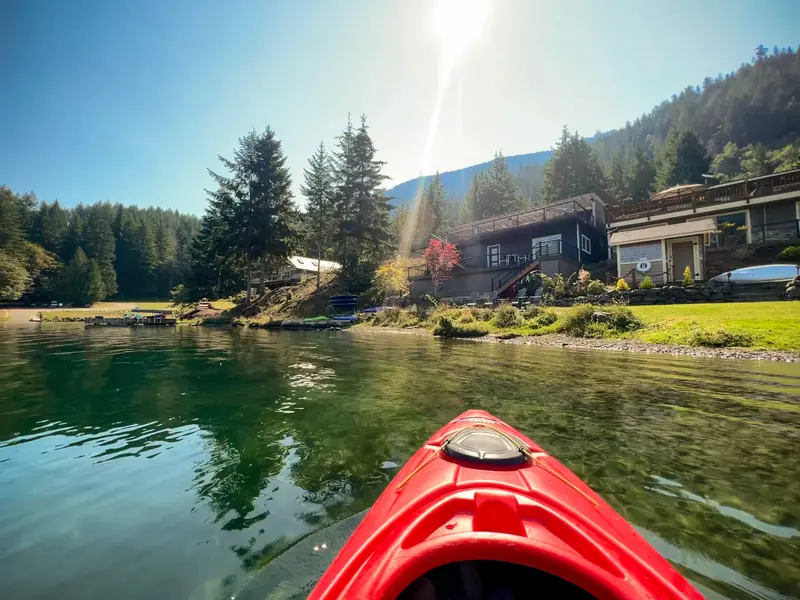 Kayaking Lake Sutherland
One day we drove over to Lake Crescent and rented a kayak there. We paddled along the shoreline for a few hours. The lake is surrounded by mountains on all sides. Very peaceful. There’s a legend that a Native American storm god threw a boulder into the lake, splitting it in two and creating Lake Sutherland in the process. Geologists have a different explanation involving glacial moraines, but the story is better.
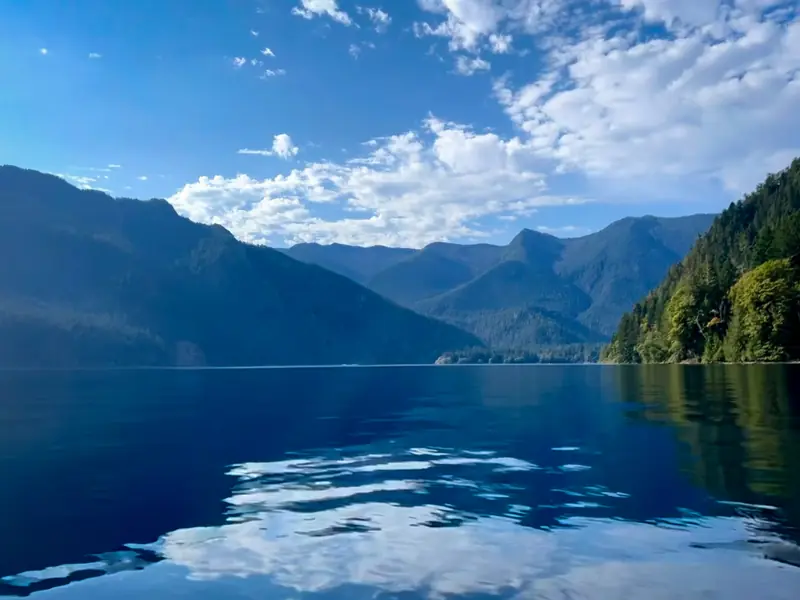 Kayaking Lake Crescent
Port Angeles Nights
We drove into Port Angeles for dinner most nights. The town sits on the Strait of Juan de Fuca and serves as the main gateway to Olympic National Park. It’s named after the Port of Our Lady of the Angels, christened by Spanish explorer Francisco de Eliza in 1791. The area has a long history of logging and fishing.
The restaurants near the pier were great. Fresh seafood, local beer, good atmosphere. We usually got back to the Airbnb around 9 or 10.
Looking Back
It was a lot of driving. The park is huge and the roads wind around mountains and through forests, so everything takes longer than you’d think. But that’s part of the experience. Every turn revealed something new. Olympic is one of those places that feels untouched, even though millions of people visit each year.
The combination of ecosystems makes it unique. You can start the day in a rainforest and end it on a mountain or a beach. Not many places offer that. The park also has the cleanest air in the lower 48 states, protected by its isolation and the prevailing winds from the Pacific. You can feel the difference.
Already planning to come back. There’s so much we didn’t get to see. The western beaches, the Enchanted Valley. We barely scratched the surface. But that’s okay. Some places are worth visiting more than once.
Missing the mountains and the sound of the ocean already. But it’s good to be home.